The short answer
This is a specialist stop for readers interested in the EB110, architecture and the ambition behind a car company. Do not build a day around entering the site without a current appointment: historic access and today’s access are different facts.
At a glance
- Place
- Campogalliano · west of Modena
- Historical opening
- 15 September 1990
- Current visitor access
- Not verified · arrange permission before travelling
Facts checked 13 September 2026. Planning allowances are editorial suggestions; dated schedules and booking conditions can change.
A French name, an Italian industrial bet.
Romano Artioli’s revival placed Bugatti close to the engineering talent of the Modena area. The factory opened in 1990; the EB110 followed in 1991. Bugatti’s own historical account identifies Giampaolo Benedini as the architect and records the end of this production chapter in 1995.
Those dates make the site unusually revealing. The buildings were conceived for a long future, while the industrial chapter was brief. You are looking at the setting of a business idea, not simply the birthplace of a famous model.
The architecture is part of the evidence.
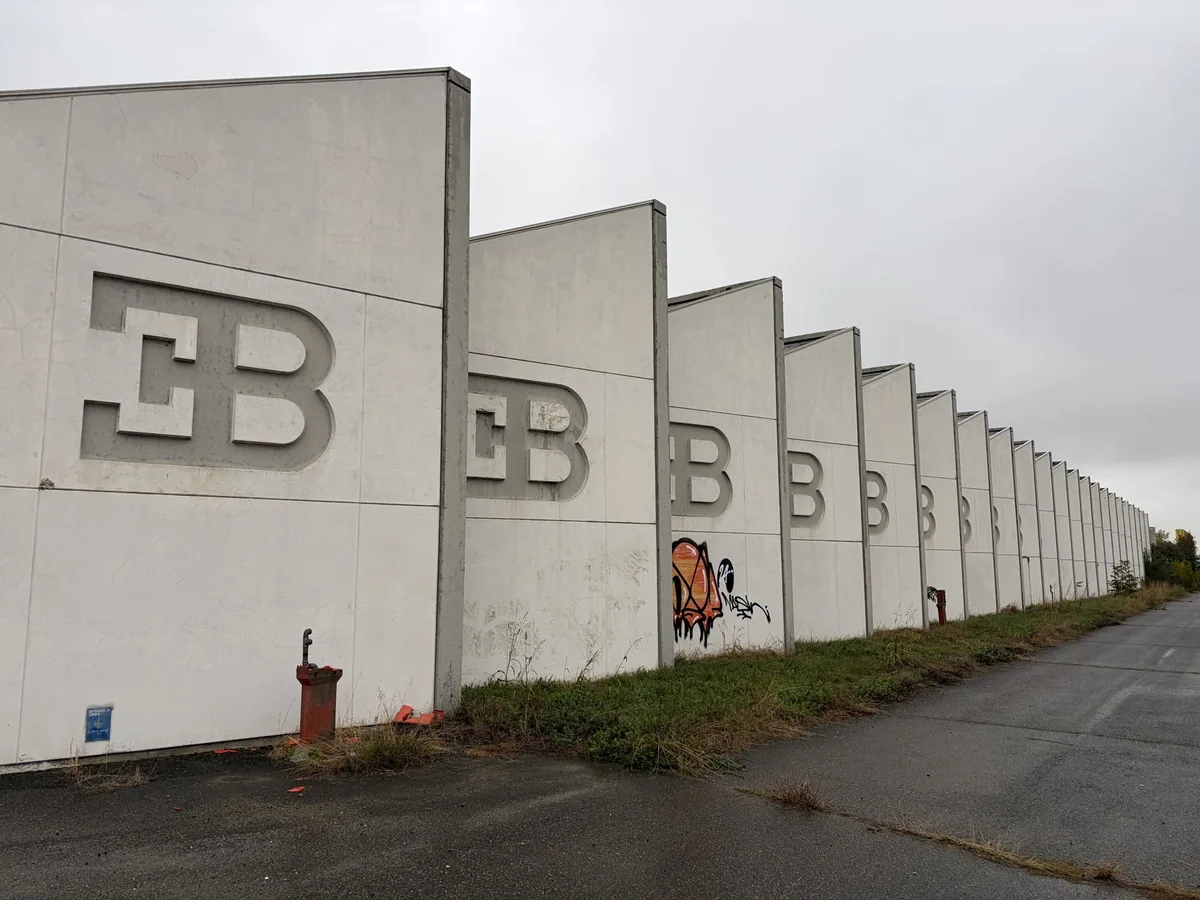
The Piloti archive photographs show repeated EB marks on the exterior, large industrial volumes and interiors with visible deterioration. They are valuable records of a previous visit. They do not show the current state of every space or prove that the same route remains open.
Look at the relationship between corporate identity and working space: a logo repeated in the building itself, the size of the halls and the contrast between a carefully designed exterior and an empty interior. The useful question is what kind of company the architecture was intended to create.
An old tour report is not a current invitation.
Bugatti’s 2019 history mentions occasional guided access, and its 2020 report documents an anniversary gathering. Both are historical sources. Neither establishes routine public opening in September 2026, a ticket price, a booking contact or permission to enter now.
Ask a current authorised organiser to confirm the meeting point, the areas included and any mobility or footwear requirements. Without that confirmation, keep this as a historical reading stop and make a public museum the day’s fixed appointment. A locked gate is not an invitation to find another way in.
Make the detour earn its time.
If access is confirmed, keep the visit focused on the EB110 era and the factory as a whole. Prepare questions about how the site was laid out and which original spaces survive. A guide who can explain the production sequence may add more than another close-up of the badge.
If you only have one day in the Modena area and want cars on display, choose the Ferrari museums or the Panini collection first. Campogalliano is a stronger addition once you are interested in the people, decisions and failed plans behind Motor Valley.
Keep the Italian and French chapters distinct.
The Campogalliano story should not be confused with a visit to Bugatti’s current French home in Molsheim. The geographical distinction matters when searching for tickets, reading trip reports or booking an organised tour.
Our judgement here is about the value of the subject and the planning decision. A personal account of the archived visit, its date and its access arrangement will add a different layer; none has been invented to fill that gap.
The photographic archive
A closer look.
More from Bugatti’s Blue Factory. Open a photograph to explore the full collection. These archive images record an earlier visit; displays and conditions may have changed.
Arrival
Find the place.
Fabbrica Blu Bugatti, Campogalliano, Italy
Map search identifies the historical site. It does not establish permission to enter or a visitor entrance.
Sources & method
Know what this guide is based on.
Prepared by Piloti editorial from the official sources below and photographs in the Piloti archive. Research was checked on 13 September 2026; the photographs are not dated evidence of current access or displays.